Español
 English
 Español


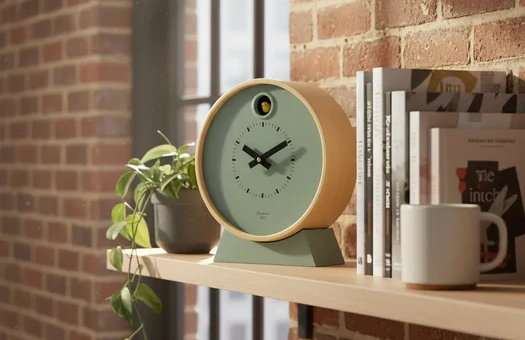
Durante generaciones, los relojes de cuco han estado tradicionalmente en la pared, a una altura muy por encima de la vista, marcando las horas desde una posición fija. Pero hoy en día, un cambio discreto está ocurriendo en hogares de todo el mundo. Cada vez más personas optan por colocar relojes de cuco en mesas, estanterías y escritorios en lugar de colgarlos en la pared.
Esta tendencia no es casual. Refleja cambios en el diseño de interiores, los hábitos de vida y cómo queremos vivir el tiempo en nuestra vida diaria.
De la decoración de pared al objeto vivo
Cuando se coloca un reloj de cuco en la pared, a menudo se siente como parte de la arquitectura. Cuando se coloca sobre una mesa, se convierte en algo diferente: un... objeto vivo Interactúas con ellos todos los días.
Sobre una mesa o estante, un reloj de cuco:
Se sienta a la altura de los ojos
Se siente más cercano y personal.
Se convierte en parte de las rutinas diarias.
Es más fácil notarlo, disfrutarlo y apreciarlo.
El sonido del cuco resulta más íntimo y el reloj en sí se convierte en un pequeño compañero en lugar de un objeto distante.
Las casas modernas favorecen la flexibilidad
Los espacios habitables de hoy son más flexibles que nunca:
Los apartamentos son más pequeños
Los diseños de muebles cambian con más frecuencia
La gente se muda y redecora con frecuencia.
Un reloj de cuco de mesa se adapta perfectamente a este estilo de vida. Se puede colocar en:
Una mesita de noche
Un estante para la sala de estar
Una consola de entrada
Un escritorio de niño
Un mostrador de cocina
Sin perforaciones, sin instalación permanente: simplemente colóquelo donde le parezca adecuado.
Un ajuste natural para el diseño moderno de relojes de cuco
Los relojes de cuco modernos son más pequeños, ligeros y de diseño más limpio que los modelos tradicionales. Esto los hace especialmente adecuados para su uso sobre la mesa.
Muchos diseños modernos presentan:
Siluetas compactas de casas o pajareras
Formas minimalistas sin tallas pesadas.
Colores suaves y materiales tranquilos.
Bases estables diseñadas para superficies planas
Estas cualidades hacen que la colocación de la mesa no sólo sea posible, sino visualmente ideal.
Aportando calidez a los espacios cotidianos
Un reloj de cuco sobre una mesa añade algo que las paredes no siempre pueden ofrecer: calidez a escala humana.
Colocado entre libros, plantas u objetos decorativos, un reloj de cuco de sobremesa:
Añade carácter sin desorden.
Crea un punto focal acogedor
Trae un sonido suave a los momentos cotidianos.
Especialmente en los dormitorios y las salas de estar, esta cercanía hace que el sonido del cuco resulte reconfortante en lugar de fuerte o sorprendente.
Perfecto para niños y vida familiar.
Los relojes de cuco de sobremesa también se están volviendo populares en los hogares familiares:
Los niños pueden ver y comprender el reloj más fácilmente
El sonido del cuco ayuda a reforzar las rutinas.
Los padres pueden ajustar o silenciar el reloj fácilmente
El reloj se siente amigable y accesible.
En un escritorio o estante, el reloj de cuco se convierte en parte del aprendizaje, no solo en decoración.
Inspirado en la vida lenta y la comodidad analógica
El regreso de los relojes de cuco de mesa refleja un movimiento cultural más amplio:
Una vida más lenta y consciente
Apreciación por los objetos analógicos
Deseo de reducir la dependencia de la pantalla
Amor por objetos con presencia emocional
Un reloj de cuco sobre la mesa marca suavemente el tiempo sin notificaciones, luz azul ni distracciones, algo que muchas personas buscan activamente hoy en día.
Estilo más sencillo, personalidad más fuerte
Desde la perspectiva del diseño interior, los relojes de mesa ofrecen más libertad:
Se pueden decorar con libros, jarrones o arte.
Se mueve estacionalmente o se reorganiza fácilmente
Se utiliza como pieza central o acento sutil.
En lugar de estar fijado a un lugar, el reloj de cuco se convierte en parte de la historia evolutiva de la casa.
Conclusión: El tiempo se acerca
La creciente popularidad de colocar relojes de cuco sobre las mesas tiene que ver con algo más que comodidad: se trata de... acercando el tiempo a la vida cotidianaCuando un reloj de cuco está sobre una mesa, se vuelve más cálido, más amigable y más humano.
A medida que los relojes de cuco modernos continúan evolucionando en tamaño, sonido y diseño, la colocación sobre una mesa parece menos una alternativa y más el siguiente paso natural.
En los hogares de hoy en día, el tiempo no necesita estar pendiente de nosotros.
A veces es mejor cuando está sentado junto a nosotros.
 IPv6 RED SOPORTADA